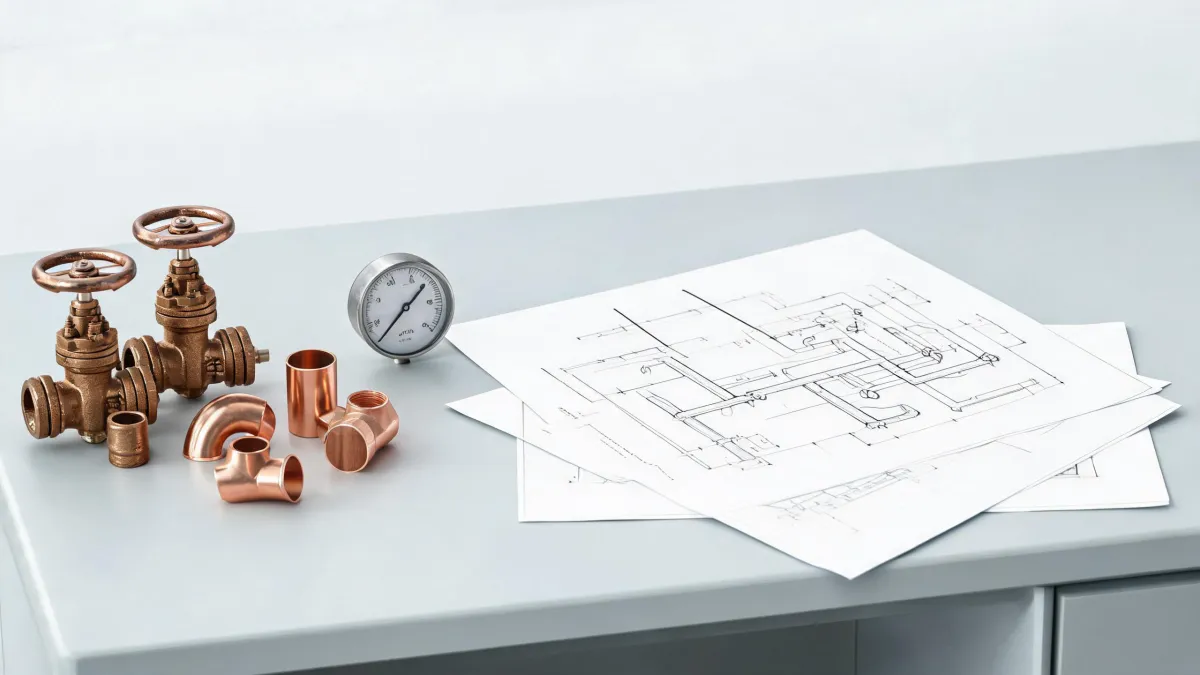
I've been processing parts orders for plumbing and maintenance contractors since 2019. In that time, I've personally made—and documented—fourteen significant mistakes. Add up the blown budgets and rush replacements: about $3,800 wasted. Most of those came down to picking the wrong NIBCO product for a job. This is the guide I wish someone had handed me before I shipped my first order.
No Universal Fit: How to Choose NIBCO Products
Here's the thing: there is no single "best" NIBCO valve, fitting, or repair kit. The right product depends entirely on the medium, pressure, and code requirements of your system. A water valve can fail catastrophically on an air line; a fitting that's fine for 150 psi may not hold up at 300 psi. So I'm going to break down the three scenarios I see most often in orders—and the specific mistakes I made in each one.
The Three Scenarios I See Every Week
Over the years, almost every order falls into one of three buckets:
- Potable water or sanitary lines
- Air compressor and pneumatic lines
- Clamps, fasteners, and general hardware
Each needs a different approach. Let me explain what I learned the hard way.
Scenario 1: Drinking Water and Sanitary Lines
When I first started, I assumed that all brass ball valves were basically the same. My first big mistake came on a 45-unit apartment retrofit. I ordered 3/4" standard ball valves without checking the lead-free rating. Later, I found out that potable water systems require no-lead materials per the Safe Drinking Water Act (which is enforced as of the 2011 amendment). That order got rejected—45 pieces, $980, straight to the scrap bin. I now check for the NSF/ANSI 61 certification mark before anything else.
That's where the NIBCO 3/4" press ball drain valve (model 80613W) became a regular in our orders. It's a no-lead valve, and it's listed to NSF/ANSI 61, which is exactly the kind of thing you want to point to when an inspector or GC asks. The press connection saves a lot of time compared to threading and soldering—especially for under-sink drain applications. But mind the pressure rating. The 80613W is rated for up to 600 WOG (water, oil, gas), which covers most residential and commercial water lines, but you still need to verify your system's maximum pressure before ordering. Don't guess. Check the datasheet.
One more thing we get wrong: repair kits. For NIBCO valve repair kits, always match the body material and the seat type. I once ordered a tungsten carbide seat kit for a soft-seated valve. It looked right, but it didn't seal. We caught the leak after install—a $400 mistake plus two hours of rework. The lesson: if the spec sheet doesn't say "compatible," don't assume it is.
Scenario 2: Air Compressor and Pneumatic Lines
Air compressor parts are a different animal. I learned this when a customer asked for a "valve for a PC1010 air compressor." I shipped him a standard water ball valve without asking any questions. Three weeks later, he came back furious—the rubber seat had deformed under heat and the valve had seized. That was on me. I should have asked what the application was.
So, with air compressor PC1010 parts, you usually need something with a pressure rating at least 1.5 times the compressor's maximum working pressure. For a typical 125 psi round-the-clock system, that means a valve rated for at least 200 psi. You also need to think about the ambient temperature. Compressed air lines around pumps and motors can get pretty warm, so standard EPDM or buna-N seals may not cut it. I would have saved my customer that headache by asking two questions: medium and temperature.
Another common pitfall: threading standards. NIBCO fittings and valves are mostly NPT (National Pipe Thread). But some compressor fittings—especially imported ones—use BSP (British Standard Pipe). They look similar and sometimes even thread together, but they don't seal properly. I had a 12-piece order where every single fitting was the wrong thread type. The customer was not pleased, and I've since made thread pitch a mandatory check.
Scenario 3: Clamps and Lock Nuts
This one surprises people because it seems too simple to cause trouble. But I've made my share of mistakes here too.
First: what does a hose clamp look like? It's a circular metal band, usually half an inch wide, with a screw housing that tightens or loosens the band. There are worm-gear clamps, spring clamps, and heavy-duty t-bolt clamps. Most people picture a worm-gear clamp, and for many low-pressure silicone hose jobs, that's fine. But if your hose sees vibration or regular temperature swings, a spring clamp is often better because it self-adjusts. I learned that after using worm-gear clamps on an air compressor outlet that vibrated constantly—two of them loosened over time and caused a leak.
Then there's the zinc plated nylon lock nut. This looks like a regular hex nut, but with a nylon insert near the top. That insert deforms around the bolt threads, creating friction so the nut won't loosen under vibration. It's the kind of thing you need when mounting a valve bracket to an engine or compressor. I once substituted a regular nut to save twenty cents on a bracket order. Within a week, the vibration loosened the bracket, and the valve torqued sideways. I had to redo the whole mount.
When you're choosing clamps and lock nuts, always check the size range. A half-inch clamp can handle a 3/8" hose, but not a 1/2" hose. And for nuts, match the thread size and pitch to the bolt—don't just grab something that "looks close."
How Do You Know Which Scenario You're In?
Before you order any NIBCO products, ask yourself three questions:
- What's the medium? Water, air, or something else? If it's water intended to drink, you need no-lead certification. If it's air, you need a higher pressure rating and compatible seals.
- What pressure and temperature does the system run at? This determines valve materials and connection types.
- What codes or standards apply? Check NSF/ANSI, IPC, UPC, or local amendments. If you're not sure, look for the certification mark on the product, or ask me—I keep the data sheets on my desk.
The question isn't "which product is best." It's "which product is best for your application." And that's the part I keep trying to tell my younger self.
If you need help with a specific application, I'll be honest about what I know and what I don't. I'm a parts guy, not a compressor engineer. But I know who to ask, and I'll tell you plainly if you're better off with a specialist—that's exactly the kind of honesty that keeps customers coming back.