Clients Judge You Before You Turn a Single Bolt
Here's a take I've defended for years: the tool bag a contractor walks in with is the most honest advertisement that contractor will ever produce. Not the truck wrap, not the website, not the Yelp reviews. The bag. Because the bag doesn't lie. A client can't read your certifications in the first thirty seconds, but they can see whether your cordless drill has a cracked housing or your safety gear looks like it was bought at a garage sale.
I coordinate emergency repair work for property managers and general contractors. When a water line starts dumping under a foundation slab at 6 a.m. on a Friday, I'm the call that gets made. That means I've spent years standing in other people's buildings, in front of their tenants, while they watch me work. And the single biggest change in how I buy equipment came from a job I still think about.
The Friday Morning That Reset My Priorities
In March 2024, a property manager called at 6:40 a.m. She had a failed gate valve on the main water line into a 40-unit building. The city was inspecting at 10. If the main couldn't be isolated, the whole building lost water and the inspection failed. She'd have been looking at a $12,000 penalty clause from the management company, plus angry tenants, plus whatever emergency water delivery would cost.
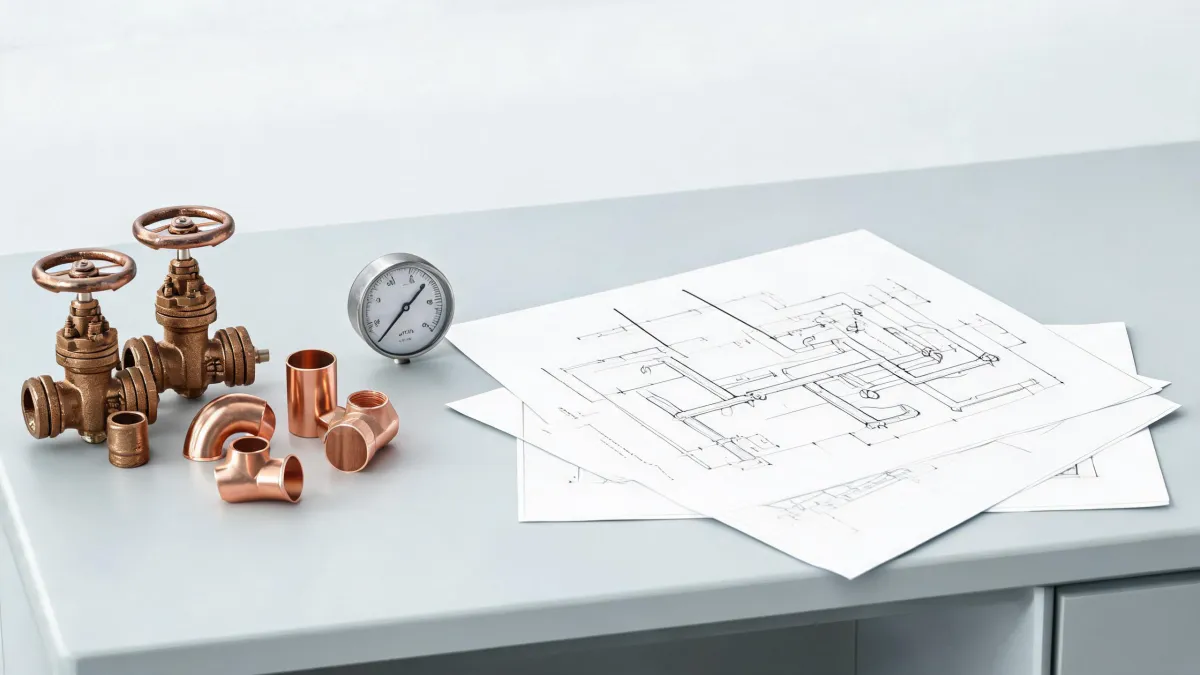
I'd done how to replace gate valve on water main jobs before. The process itself isn't complicated — isolate, drain, cut out the old valve, sweat or thread in the new one, pressure test. What made it complicated was that I had to open a 4-inch wall section to get to the valve body, and the concrete was older than I expected. That's a multi-hole job for a hammer drill, not a one-and-done.
I made the 40-minute drive with a cheap corded hammer drill I'd bought on sale a year earlier. Forty minutes and eleven holes in, the drill's motor started smoking. The bit seized. The chuck wouldn't release. I finished the cut-out with a cold chisel and a 4-pound sledge (not the plan, not fast, and not how you want a client to see you work).
We made the inspection with about 20 minutes to spare. The client was relieved. And then she stood next to me while I packed up, looked at the dead drill with the melted housing, and said — I remember this almost word for word — "My old plumber had tools like that."
She didn't renew the service contract. I don't think she made a logical decision. I think she made a gut one, and the melted drill was the thing her gut held onto.
What "Good Enough" Actually Costs
I replaced that drill with a Porter-Cable corded hammer drill — the same general category I use for most masonry work now. The reason is boring and practical: corded hammer drills deliver consistent torque and don't quit on you at hole nine of fifteen because the battery decided to start its thermal shutdown. In tight, one-shot jobs, consistency beats convenience.
But the equipment lesson runs deeper than any one drill. Once I started paying attention to what experienced tradespeople actually carry, I noticed a pattern that isn't really talked about:
Professionals don't buy the cheapest option. They buy the option with the best long-term parts and service picture. That's a different question entirely.
Take air compressors. I run a Porter-Cable 135 PSI air compressor as a backup unit on the trailer. Not because it's the most powerful thing on the market — it isn't, and I'm not going to pretend otherwise. I chose it because porter cable 135 psi air compressor parts are easy to source, there's decent documentation on the carburetor, regulator, and pressure switch, and I've never had to wait more than a few days for a replacement. When a compressor is down for three days, the jobs that depend on it are also down for three days. Parts availability stops being a technical detail and becomes a scheduling problem.
I've tested this on the other side too. Years ago I bought a discount-brand nail gun. No parts catalog. No service network. When the driver blade chipped, the entire tool became a paperweight. I paid $40 less at purchase and about $180 more in replacement six months later. That's the math nobody runs at the register.
Safety Gear Is a Client Signal, Not Just a Legal Requirement
This is where I'll probably get some pushback. I wear chainsaw pants for anything on the trailer that even looks like it might involve a reciprocating or chain-driven cutting tool. I know that sounds excessive. It isn't about the immediate task — it's about liability, the people working near me, and honestly, how the client reads the situation.
Clients who don't know tools don't know the difference between a good drill and an expensive one. But they do know when someone shows up prepared. The chainsaw pants are part of that. So is the eye protection, the hearing protection, the marked-out work zone. None of that takes skill. All of it sends a signal: this person runs a professional operation.
I've had property managers specifically mention the safety setup when they referred me to other buildings. The money I spent on good PPE made me more money than the money I spent on marketing. I didn't expect that when I started buying it.
The Tools That Earn Their Space in the Trailer
A small welder probably looks like overkill to people who don't do emergency repair. But a good multi-process unit — I carry a 140-amp inverter welder — solves a specific category of problem that nothing else does: metal failure. Cracks in a steel door frame, broken gate hinges, a snapped bracket on a rooftop unit. When that problem shows up, the options are to weld it, wait on a specialty contractor, or rig something up that your liability insurance will hate.
I'm not going to pretend I weld structural steel. I don't. I weld repairs of opportunity: brackets, hinges, guards, frames that need to hold until a proper fix. That's a legitimate use case, and having the capability saves me hours that would otherwise be spent waiting or improvising.
"But What If the Budget Is Tight?"
I know the objection. "Not everyone can afford professional-grade everything." True. And I'm not going to sit here and tell you to spend $3,000 outfitting a truck when you're starting out. That's how you go out of business before the tools ever pay for themselves.
What I will say is this: buy on a repair-and-replacement timeline, not a purchase-price timeline. Ask three questions about every tool you buy, and you'll end up spending less over five years even if you spend more next Tuesday:
- Can I get parts for this in a week or less? If the answer is no, the tool is disposable. That's fine for a $30 tool. It's not fine for the one you need on a Friday morning.
- Does the manufacturer document the thing? Parts diagrams, service manuals, torque specs. Upkeep literacy matters. Tools with documentation last.
- Would I be embarrassed if a client saw this fail? If yes, it probably shouldn't be the tool you bring to a critical job.
That third question is the one that changed my buying habits. Not because clients are shallow — because the emotional read they get when your equipment fails is a real thing, and you can't argue them out of it later with a good invoice.
The Math Nobody Runs
Here's what I think most tradespeople get wrong about "going cheap." They compare the price of Tool A and Tool B and stop there. But the real cost of a tool is: purchase price, plus downtime, plus rework, plus the client's confidence, minus salvage. Most of those line items are invisible at the point of sale.
I'm not perfect at this. I still own a discount multi-tool that has earned its place because it only ever needs to cut drywall, and if it dies, it dies. But the tools that touch a client's building on a deadline — the hammer drill, the compressor, the safety gear, the welder — those have to be the ones where I've bought the parts chain and the service manual, not just the sticker price.
And honestly? The melted drill wasn't the worst thing that happened that Friday. The worst thing was what the property manager said after. Because she was right. My old tool was telling the truth about my operation, and I just didn't know it was talking.