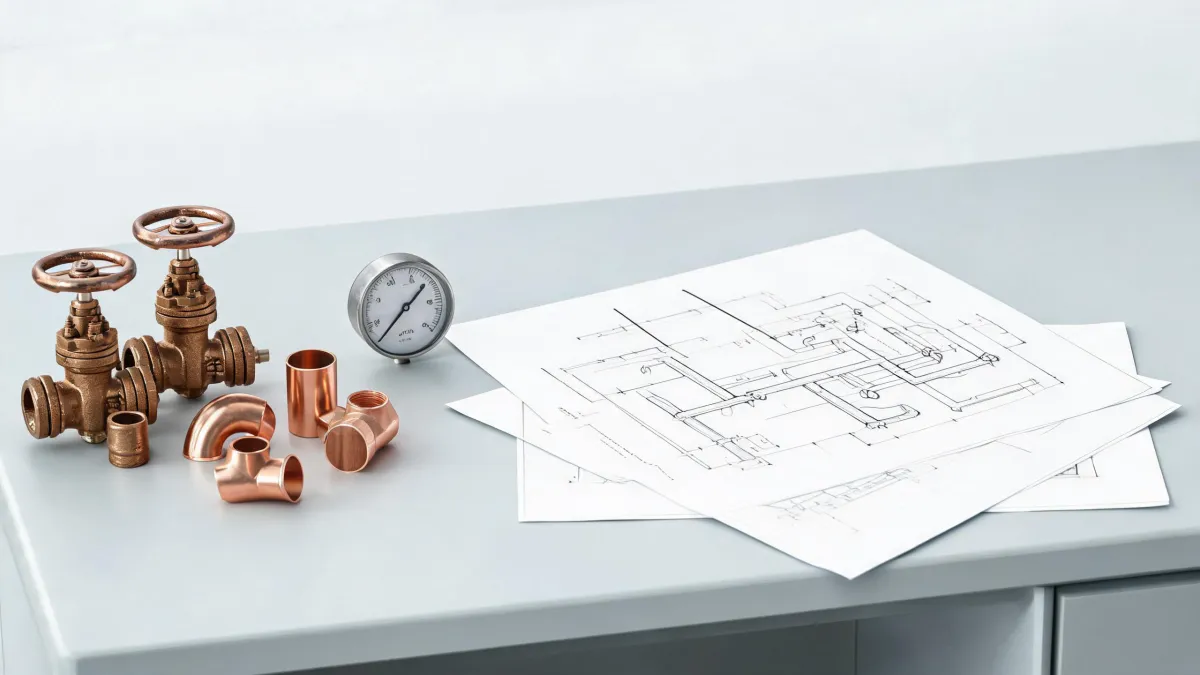
The Call That Started It All
At 6:30 AM on a Tuesday last March, my phone buzzed. A Scala2 water pump had failed in a 12-story office building, and the mechanical room was flooding. As the maintenance supervisor for a facilities management company, I've handled 200+ emergency repairs in 10 years, including same-day turnarounds for commercial clients. But this one had a hard deadline: the building's tenants were due back in 48 hours, and the property manager was already talking about a $50,000 penalty clause.
I grabbed my go-bag and headed to the site. On the way, I mentally ran through the checklist: isolation valves, press tool, impact wrench, angle grinder. Normal turnaround for a pump swap is 3-5 days, but we had two.
The Initial Misjudgment
When I first started doing emergency repairs, I assumed the hardest part was sourcing the replacement parts. I thought if we had the right NIBCO bronze ball valve and a NIBCO press ball valve on the truck, the rest would be straightforward. That Tuesday taught me otherwise.
We arrived to find a chaotic scene. The Scala2 pump—a Grundfos model commonly used for commercial pressure boosting—had seized, and water was spraying from a cracked fitting. The main isolation valve, a NIBCO bronze ball valve, was so corroded that the handle snapped off when we tried to close it. (Surprise, surprise.) We had to shut down the building's water supply at the street.
The Real Problem: Rebar and Rust
Once the water was off, we started cutting out the old piping. That's when we hit the first snag: a cluster of #5 rebar had been poured directly behind the pipes during the original construction. There was no room to swing a wrench, let alone fit a press tool.
"Can an angle grinder cut rebar?" one of my techs asked. Yes, it can, but it's not a walk in the park. You need a proper cutting wheel—an abrasive disc rated for metal—and you have to go slow. We burned through two discs and created a shower of sparks, but eventually we cleared enough space. (Note to self: always check as-built drawings for hidden obstructions. I really should have done that.)
With the rebar out of the way, we could access the old valve. The bolts were rusted solid. A standard wrench wasn't going to cut it. We pulled out the WR22SE impact wrench—a 1/2-inch drive model with enough torque to loosen just about anything. According to the specs, it delivers around 600 ft-lbs of forward torque, which is overkill for most plumbing, but perfect for rusted industrial fittings. It made short work of those bolts.
The NIBCO Solution
We replaced the old valve with a new NIBCO bronze ball valve. Why NIBCO? Because their bronze valves are known for reliability in potable water and HVAC systems. They meet NSF/ANSI 61 and NSF/ANSI 372 for lead-free compliance (verify with current standards). For the new line, we used a NIBCO press ball valve with ProPress fittings. Press fittings are a game-changer for emergency work: no open flame, no soldering, just clean, fast connections.
But here's the honest limitation: press fittings need clean, round pipe ends. If your pipe is pitted or out-of-round, they won't seal properly. We had to cut back further than planned to get good pipe. That's the kind of thing you don't learn until you're in the field at 9 PM with water dripping down your neck.
We got the NIBCO valves and press fittings installed by 10 PM. The press tool did its job, and the joints held on the first try. (Which, honestly, was a huge relief.) The Scala2 pump replacement went smoothly once the piping was sorted.
The Frustration and the Fix
The most frustrating part of that night: we almost missed the deadline because of the rebar. We had planned for a standard valve swap, not a demolition job. After the third time we hit an unexpected obstruction, I was ready to swear off emergency work entirely. What finally helped was stepping back and prioritizing. We focused on the critical path: get the water off, clear the obstruction, install the new valves, then the pump. Everything else could wait.
We finished with 4 hours to spare. The client's alternative was a $50,000 penalty. We paid $800 extra in rush fees for the Scala2 pump (on top of the $2,500 base cost), but it saved the project. That's when we implemented our "48-hour buffer" policy: for critical infrastructure, we now add a full day for unexpected obstructions.
Lessons Learned and Honest Recommendations
If you're facing a similar emergency, here's what I'd tell you:
- For NIBCO press fittings: They're fantastic for 80% of jobs. Use them when you have clean, round pipe and need speed. But if you're dealing with extremely high pressure or old, corroded pipes, traditional threading or welding might be safer. Don't force a press fitting onto a bad pipe.
- For angle grinders and rebar: Yes, you can cut rebar with an angle grinder. Use a diamond blade or abrasive wheel, wear eye and ear protection, and expect sparks. It's a last resort, not a first choice. If you have a rebar cutter, use that instead.
- For impact wrenches: The WR22SE is a solid choice for rusted bolts. Check the specifications for your model—torque, drive size, and air requirements. It saved us hours.
- For water pumps: The Scala2 is a reliable pump, but like any mechanical equipment, it fails. Keep a spare on hand if you can.
At the end of the day, emergency repairs are 20% skill and 80% expecting the unexpected. Keep a NIBCO press tool, a WR22SE impact wrench, and a spare angle grinder on your truck. And always, always check for rebar.
Prices as of March 2025; verify current rates.