Start With the Number That Changed My Spreadsheet
A $27 hose bib repair kit cost us $412 in total. That's the whole article in one line, but let me unpack, because the math gets more interesting when you scale it.
I run maintenance procurement for a 340-person commercial property management firm. Over 6 years, I've processed roughly 4,200 line items — plumbing, HVAC, field tools — totaling about $890,000. I built the TCO tracker after my second 'cheap part' disaster in 2021. Since then it's saved us somewhere between $12,000 and $18,000 a year, depending on how you count avoided downtime.
Here's the thing most buyers miss: the sticker price is maybe 40% of the real cost. The other 60% is failure rate, labor to redo the job, and the interval between replacements. When I run those numbers, cheap aftermarket parts win about 4 out of 10 times. Not zero. Just not as often as the price tag suggests.
The part that looks cheapest on the invoice is the one that usually costs the most by the end of the year.
Why Trust These Numbers
I'm not a plumber, and I'm not a tool engineer. I'm the person who signs the PO and reconciles the invoices. That's my bias and my value. I see what was ordered, what came back broken, and what got reordered three months later. Over 6 years, that pattern is hard to fake.
Two disclaimers upfront. First, our context is commercial property maintenance with 24-hour response requirements. If you're a residential handyman working on your own schedule, the downtime penalty is smaller and cheap parts look better. Second, this gets into code compliance territory — which isn't my specialty. For anything involving potable water, backflow prevention, or fire systems, consult a licensed contractor before choosing parts.
Where the Money Actually Goes
1. Hose bib repair kits
The failure I described above was a hose bib that kept dripping after a cheap rebuild. We used a generic repair kit, it held for three weeks, then started leaking inside the wall. The NIBCO hose bib repair kit we switched to costs about $48 from our distributor as of Q1 2025. The generic version was $22.
That $26 gap bought us: no call-backs on the 14 units we've since repaired, and zero water-damage claims. For a multi-family property, one water damage claim averages $1,800 in our records. Do that math once and the OEM kit looks cheap.
Here's where it gets counterintuitive: I now order the branded kit even when a generic is available, because I stopped treating seals as interchangeable. The stems, seats, and seals in the OEM kit match the valve body dimensions. The generic kit 'fits' but doesn't seal the same way. That's not marketing — that's what our failure log shows.
2. Gate valves (T-113 type)
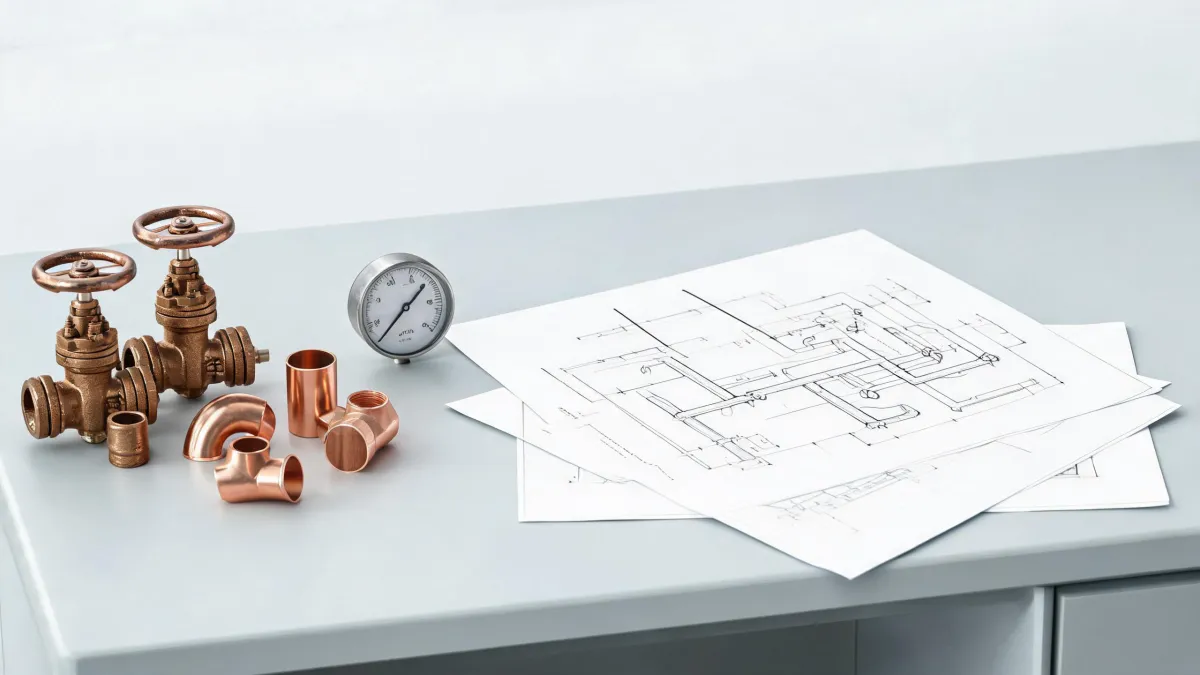
The NIBCO T-113 is a bronze gate valve we spec on most of our 1/2" to 2" lines. It's not the cheapest valve on the market. It runs about $70–140 depending on size and pressure rating, based on our Q1 2025 quotes from three suppliers.
The cheap imports quote at $35–60. I've tested those. Twice. Both times, the stem packing failed within 18 months on hot water lines. Replacing a gate valve isn't the valve cost — it's the labor to isolate, drain, cut, and re-solder. Our average is $340 per replacement in labor and downtime. The T-113 has a track record in our buildings going back before I started this job.
Does that mean every cheap valve fails? No. Some hold fine for years. But I can't predict which ones, and I can't afford to find out at 2 a.m. in February. When the cost of being wrong is $340 and the cost of being right is $60 more, I'll pay the $60.
3. Air tool rebuild parts
Same logic applies to air tools parts, and this one surprised me. We were buying $18 rebuild kits for our nailers and impact wrenches, replacing them every 4–6 months. Switched to OEM parts kits at $45 and the interval stretched to 14–18 months.
Per tool, per year, the cheap route was costing us $54 in parts plus about an hour of labor at $65/hour. The OEM route: $45 in parts plus 20 minutes of labor. Savings of roughly $130 per tool per year. Across 22 air tools, that's about $2,900 annually — small in the grand scheme, but it's free money once you make the switch.
The caveat: OEM parts only pay off when the tool housing is still in good shape. If you're rebuilding a tool with a cracked housing or worn anvil, you're polishing a turd. Buy new.
Two More Purchases Where Size and Speed Matter
The largest tool box isn't the right tool box
We bought the largest tool box in the catalog in 2022 — a 72-inch roll cab for our main shop. Cost: about $1,400. It's now 60% empty and takes up half the walkway in the maintenance bay.
The math I should've done first: our techs carry most tools in their vans. The shop box holds overflow and specialty tools. We needed about 40 cubic feet of secure storage, not 70. A 52-inch unit at $850 would've covered us with room to grow.
Buying too big isn't free. It's square footage you're not using, and a bigger footprint to organize and eventually clean. For most maintenance operations, mid-size wins. Only go biggest-in-catalog if you actually have the inventory to fill it within the next 12 months.
Cutting porcelain with an angle grinder: cheap blades, expensive rework
On the field side, 'how to cut porcelain tiles with angle grinder' is something our remodel techs ask about constantly. The tool itself is fine — a variable-speed grinder with a diamond blade cuts porcelain cleanly. The mistake is buying cheap blades.
A $12 diamond blade on porcelain scores and chips the glaze. A $35 continuous-rim diamond blade cuts clean. When you chip a tile, you don't just lose the $6 tile — you lose the set time and you risk tearing the waterproofing underneath. Our rework cost on tile jobs runs about $85 per chipped tile when you count labor and materials.
The cheap blade isn't cheap. It just moves the cost from the tool budget to the rework budget.
When Cheap Is Actually the Right Call
I want to be honest about the boundaries here, because I've seen people over-apply this logic and overspend on parts nobody needed.
Cheap parts are the right call when: failure is visible and low-consequence (something you can see dripping and fix on a normal service call), the part is going into a temporary or non-critical line, or you're doing a same-day patch to get a system back online until the proper part arrives.
They're the wrong call when: failure is hidden (in-wall, underground), downtime has a hard cost (24-hour service clauses, tenant impact), or the labor to replace the part is more than 5× the part cost. That last rule has done more for our budget than anything else. If labor > 5× parts, buy the good part. Simple.
I can only speak to commercial property maintenance. If you're running a one-truck operation or doing residential work, your downtime math is different, and cheap parts might win more often than they do for us. Test it against your own numbers before you take my word for it.