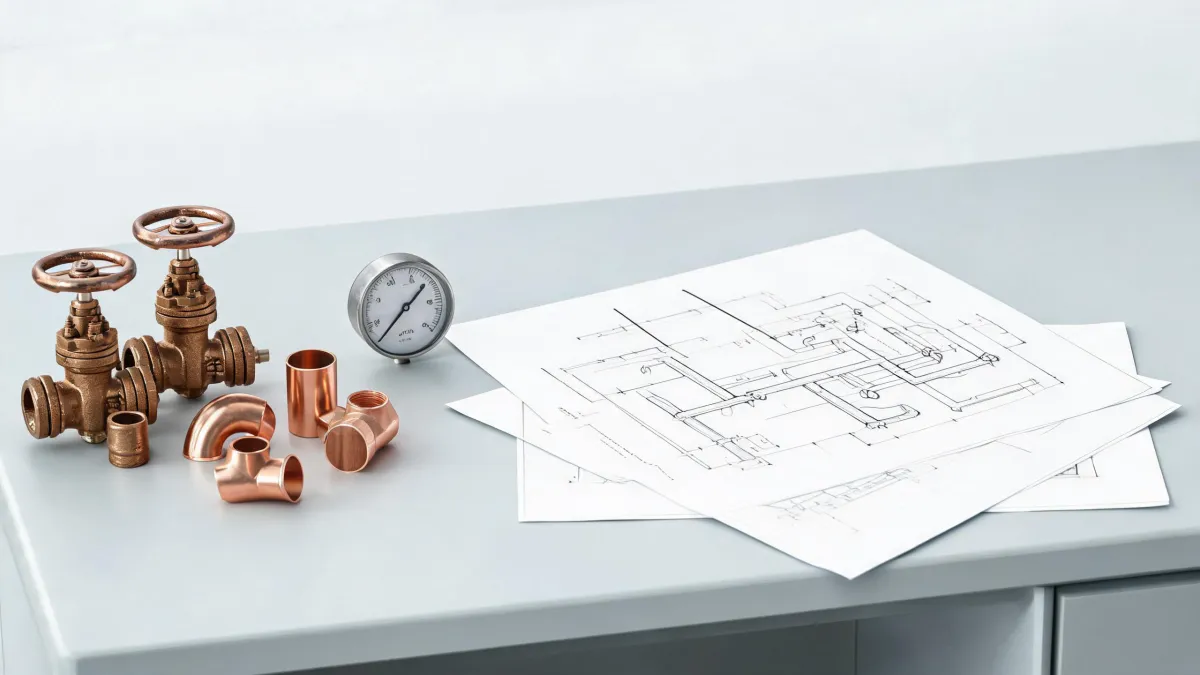
I'm not a plumber. I'm the office administrator for a 180-person manufacturing company, and I manage all maintenance and facilities ordering—roughly $400K annually across 12 vendors. I report to both operations and finance, so I see the numbers from both sides. And after six years of this, here's my strong opinion: buying the cheapest ball valve you can find is one of the most expensive decisions a facility can make.
That sounds dramatic, I know. Let me show you the math.
The Cheap Valve Math Nobody Does
In 2022, I approved a purchase of budget-friendly ball valves for a water line upgrade. I assumed all bronze valves perform basically the same. Didn't verify the casting quality or the stem tolerances. Turned out they don't.
Within 14 months, three of them failed. Two seized open, one leaked at the stem. The replacement cost wasn't the valve—it was the labor. One of our maintenance techs spent the better part of two days draining lines, swapping valves, and repressurizing. At roughly $45/hour fully loaded, that's $700 in labor to replace $30 worth of valves.
That's the thing people miss. A valve that's $10 cheaper but fails in 14 months is not cheaper than a valve that lasts years. This isn't to say NIBCO is the only valve worth buying. It's to say consistency has a price—and the cheapest option rarely delivers it.
Why the NIBCO Ball Valve Catalog Changed How I Spec
Here's something I didn't expect: the NIBCO ball valve catalog is actually a decision tool. The surprise wasn't the product range—it was how much easier my job became once I started using it.
The catalog organizes valves by pressure rating, connection type, and material. When our maintenance team needs a replacement for a 2-inch domestic water line, I can find the right NIBCO ball valve without guessing. That matters when you're a non-technical buyer like me.
I should add that compliance is a big part of my role. Our municipality enforces lead-free requirements under NSF/ANSI 61. The catalog clearly marks which models are lead-free, so I can verify compliance instead of hoping the distributor got it right. That verification isn't optional—a vendor once sold us fittings they claimed were compliant. They weren't. The rejected invoice plus re-certification costs set us back $2,400 and made me look bad to my VP. Now I verify everything.
Here's the Misconception That Caught Me Off Guard
I used to think globe valves were outdated. Ball valves turn 90 degrees and shut off tight. Why would anyone want a globe valve with all those turns?
Then I learned about flow control. A ball valve is made for isolation—on or off. Use it to throttle flow, and you can damage the seats. Globe valves are designed for throttling. They're the right tool when you need to regulate flow rather than stop it. That's why we keep NIBCO globe valves in stock for steam and HVAC applications. Not because they're the newest thing—because they're the right thing.
The lesson stuck with me: the best valve isn't the most expensive or the most advanced. It's the one that matches the application. What I mean is, spec'ing a valve without knowing the job is like buying a 3600 psi pressure washer when you just need to rinse a warehouse floor. A 3600 psi machine sounds impressive—until you realize it can damage finishes and the flow rate isn't actually what you need. The rated number matters less than the match to the task.
Why Understanding CFM Changed How I Buy Everything
One of the most surprising lessons in this job? Specs only help if you understand what they actually tell you.
Take air compressors. I ordered one in 2024 based on maximum pressure—looked great on paper. Our maintenance team kept telling me it couldn't keep up. I didn't get it. The pressure was fine, so what was the problem?
Turns out, CFM—cubic feet per minute—is the number that matters for air tools. PSI is how hard the air pushes. CFM is how much air flows. A compressor can have high pressure but low CFM, and then every tool in the shop runs weak or the tank drains instantly. Honestly, I'm still not fluent in compressor specs. But I now know to ask “what's the CFM at typical tool pressure?” before buying. It's the flow, not the pressure, that does the work.
The same thinking applies to everything I buy. A 120xp socket set—with its high-tooth-count ratchet—is great for tight spaces, but it's the wrong purchase if your mechanics rarely work in tight spaces. We match the tool to the task, not the other way around.
Match the product to the function, not to the price tag.
When I Don't Recommend NIBCO
Here's the honest part—and I think this is where a lot of procurement advice goes wrong. I recommend NIBCO for maybe 80% of our facility needs. Not all of them.
If you need a specialty alloy for an aggressive chemical application, or you're working to a specification that requires a different manufacturer, or you just need a truly low-cost valve for a non-critical irrigation line—go with what fits. I've specified other brands when the application called for it. Part of me wants to say one brand does everything. Another part knows that's lazy buying.
Having a default doesn't mean having a blind spot. It means you know your baseline, and you also know when to deviate.
The Bottom Line
The argument I hear constantly in purchasing is: “just get the cheapest one that meets the spec.” I've been that person. I approved those valves in 2022. I paid for the repair labor, the downtime, and the trust from my maintenance team in 2023.
This is accurate as of early 2025, by the way. Plumbing codes and prices change fast, so verify current standards before you budget. But my point isn't about a specific price or a specific code. It's about a principle:
Buy the right tool for the job. Standardize on quality where it matters. And don't let brand loyalty—or the lack of it—make the decision for you.
Maybe that's obvious advice. I didn't always follow it. Now I do.